
In my U.S. Government classes, I usually begin the class with a discussion of what a government does. In that discussion we always talk about the need for government to balance Freedom, Security, and Equality. At the heart of it, that’s what government is, a balancing act between the principles of order, freedom, and equality. The two of these that most often come into conflict with one another are probably order and freedom. A maximum of freedom, and you have anarchy; a maximum of order and you have totalitarianism. Neither one is a great option, so there is a point at which you give up freedom to secure some kind of order which allows society to function properly. This is the most basic tenant of Social Contract Theory. While all the social contract theorists have different views of what human society looked like before government, all agree that the central reason for forming government is to seek security and order in and unordered and chaotic “state of nature”.
In the film Captain America: Civil War our heroes are confronted with this basic dilemma. Just how much freedom should be given up in favor of security and how much should be retained?
The Central Conflict

We rejoin our heroes in this film as they undertake a mission in Nigeria. The mission is ultimately a success, but one of the villains throws a bomb. Scarlet Witch uses her abilities to contain the blast, but she is unable to hold it, and the explosion tears through a building, killing some bystanders. She is understandably upset by this, as is the entire team. They return to their headquarters and are visited by Secretary Ross, who reminds them of the collateral damage from their many engagements (New York, Sokovia, and most recently Nigeria) and presents them with the Sokovia Accords. A international agreement which would place the Avengers under the control of the United Nations. The scene that follows shows our heroes debating the options and sets up the central conflict.
The question is between the group submitting to the authority of an outside, international panel, or not, continuing to work independently. On one side Captain America makes the argument that while they may not be perfect, they are still the best ones to make the decisions regarding how and where they apply their skills. Essentially making the argument that freedom, their freedom to choose, is more important than the order that might be achieved from international oversight. On the other side of this debate is Iron Man who believes that, one, government oversight is inevitable, and two, they need oversight. Too many people have been killed by their actions (he feels directly responsible for the disaster in Sokovia as it was his creation that went rogue and caused that devastation) and that if they are to serve the people of the world, they also need to be answerable to the people of the world. In essence we have a debate between the philosophical theories of Deontology and Utilitarianism.
Captain America: Deontology, or Right is right and Wrong is wrong
Deontology is a philosophy put forth by German philosopher Immanuel Kant, and argues the essence of the word “ought”. The question is not what can be done, or what would give the best outcome, but rather what should be done, or ought to be done. Deontology rests on the idea of a person’s moral duty and that there are universally right actions and universally wrong actions. This assumes a universal moral standard by which all actions should be judged. Kant called this standard “The Categorical Imperative”. Under this actions are to be judged according to this list of rules:
- “Act only according to that maxim by which you can also will that it should become a universal law without contradiction.
- Act in such a way that you treat humanity, wether in your own person or in the person of any other, never merely as a means to an end, but always at the same time as an end.
Therefore, every rational being must so act as if he were through his maxim always a legislating member in the universal kingdom of ends.
~Immanuel Kant
Here, Kant is saying three things first that every person has an intrinsic value and should be valued because they are a person, not just as a means to a greater end. This is really a core value for Captain America which is really present in a line from the latest Infinity War film, “We don’t trade lives.” Here he states plainly that no person should be seen as a means to an end, but rather valued individually as a person. In the case before us in Civil War, Cap fears that the Avengers will essentially become a means to an end for this government agency. Governments are run by people with agendas and those agendas can change, and in agreeing to oversight they are becoming pawns for an organization that may or may not have the best interests of the world or the team at heart.
The stance from Captain America here is not surprising given his story. He began life as a government experiment and spent a lot of time as a propaganda tool. In Captain America: Winter Soldier, Cap learns that he has been serving as a tool of a corrupted government agency (taken over by HYDRA) and seeks to take them down, when again the conflict between freedom and security takes the form of giant helicarrier that can target potential threats before they do anything threatening. Again the Captain takes the side of freedom preferring to accept the perils in allowing people to commit crimes first before they are punished for them. Here he tells us that the price of freedom is high and that it means accepting a certain level of chaos and uncertainty that must follow allowing people to act and choose for themselves.
Much of the Captain’s philosophy rests on the idea that if you agree that something isn’t good for you, then you can assume that it isn’t good for others. To limit the freedom of some opens the door to limiting freedoms for others and the only right way to approach that decision is to err on the side of freedom. As a result the Captain sees a loss of freedom for the team as a deal breaker.
Iron Man: Utilitarianism, or the Needs of the Many Outweigh the Needs of the Few
On the other side of this conflict is Iron Man. Tony makes the argument that the incidents and mistakes made by the team are great and that to continue to operate independently, with no oversight will lead to even more damage. Again, if they are going to serve the people of the world, then let the people of the world have some authority over their actions. Iron Man’s views are not surprising given his story. He has tended toward more security. In Age of Ultron, Tony creates the Ultron program as a means to secure the world describing it as a “suit of armor around the entire world”. Every action he takes in that movie is taken from a drive to protect and secure. Ultimately it blows up in his face, and at the beginning of this film he is confronted by the consequences of those mistakes. Tony is confronted by the mother of the young man killed while doing foreign aid work in Sokovia.
Tony supports the accords because while they will mean a loss of freedom for the team, it will also mean a greater chance to lessen the damage the team can cause with their mistakes. In essence “the greatest good for the greater number of people.” Tony is following an essentially Utilitarian view point. Utilitarianism is the notion that relative morality exists and is based on outcomes. The action that produces the greatest level of happiness for the largest number of people. In this world view, each individual is taken as part of a larger whole. It assumes a kind of moral calculation in which we must assume some individual will lose out in order to achieve the greater good. In this scenario, the Avengers will lose something (their freedom to choose) in order to achieve the greater good.
Why Captain America is right 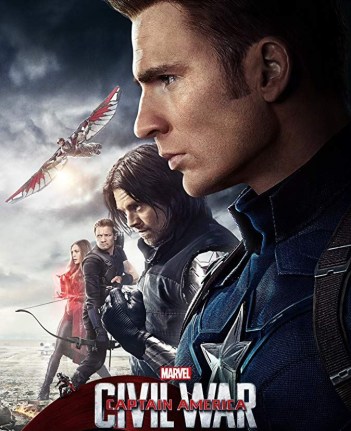
The Captain makes some pretty solid arguments for why the Accords are problematic, beyond just the loss of freedom. First, Captain America makes the argument that this government panel, while yes will not represent one government or one idea, is still composed of people and people do things for reasons. The membership of the panel may change as governments change and the agenda of the panel may change with it. He has personal experience with seeing an agency he supported become corrupted and leave the people working for them at their mercy. Most of the agents working at SHIELD during the events of Winter Soldier were unaware who was really pulling the strings in SHIELD. Cap’s memory of these events are still fresh and he can see that this might happen again. The UN is also a famously dysfunctional organization. Sending regular everyday UN Peacekeeping forces to places where they are needed is difficult enough, so it doesn’t instill a lot of confidence in their ability to direct the Avengers.
Cap also points out that the potentially changing politics of the panel can mean that the team might be sent to do a job that they don’t agree with, or (as happens often with UN Peacekeeping forces) they may need to go somewhere and the panel can’t create the consensus needed to send them there. Cap does acknowledge that the team isn’t perfect, they do make mistakes, but despite that they are still the best place to make decisions about how and where they intervene.
Also, if they register under the Sokovia Accords there is also a good chance that their identities (for those still keeping them secret) could be revealed, and place them and those close to them in danger. Again the crux is choice (aka freedom). Tony chose to tell everyone he was Iron Man, but someone like Peter Parker still keeps his identity a secret, and may not want to reveal it. Signing on can remove that choice from him.
Why Iron Man is right

Iron Man believes that the Avengers have made too many mistakes and put too many lives at risk. Essentially the team already makes judgements and accepts a certain amount of collateral damage when they act, and so it makes sense that those most vulnerable have the chance to have a say in where the team goes and what they do. The hope is that this oversight can lessen the negative impact of the team’s actions, or perhaps, at the very least, distribute the responsibility for their mistakes more broadly. The Captain points out that governments are run by people with agendas, but the team also has agendas. He has experience with being the pawn of a corrupted agency, but there is also a mistake in thinking that this is cause to assume the worst of any government or international governing body. No, no people are perfect, but the team is also composed of people who aren’t perfect, so what exactly makes them better than this proposed oversight committee?
Perhaps more convincing is the argument that Black Widow gives for her agreement with the accords. She has always worked in the shadows as a spy and assassin, but in Winter Soldier dumped all of her activities for the world to see and judge when she dumped SHIELD’s information. She sat before Senate Hearings to defend her actions. In a way she has already experienced the situation that the accords represent. Her argument is basically a practical one. The moment that that information was let lose, the road toward greater oversight was begun. SHIELD was an agency working for the most part beyond the purview of individual governments, it had the power to reshape the world, violently if necessary, and was prepared to use it. To much of the world The Avengers and SHIELD are hard to separate. They are a creation of that organization and they are also enjoying the same carte blanche. As Black Widow sees it, this move was only a matter of time. For her, compliance means that they do get to have a say in how the teams is managed. As she puts it, one hand on the wheel is better than none.
The take away…
Ultimately, there are good arguments on both sides and problems with both sides. This questions between a universal right and utilitarian relativity, of freedom and security, are points that we will argue within our governments and our daily lives as long as human society exists. Ultimately, the two will always come into conflict and we must always performa balancing act between the two. What side you come down on is really a product of your of world view and experiences in life and we see that with Captain America and Iron Man.
In a way, while Captain America is greatly concerned about the well-being of his team, he is also far more willing to accept the existence of “collateral damage”. He is sorry for the loss of life, but sees a bigger picture and while he may say, “We don’t trade lives,” he is willing to accept these casualties to defend that bigger picture; it is a kind of cold calculation. Iron Man on the other hand has throughout his story always taken things personally. He felt personally responsible, once he saw that his company was double dealing behind his back, he feels the loss of the kid in Sokovia as a personal failing. In seeing that the team is causing this damage, he wants to stop it. He almost can’t see the forrest for the trees. In the end, the real trick is to see the trees, but also see the forrest, to strike that balance between freedom and security. That really is the hardest part.

